

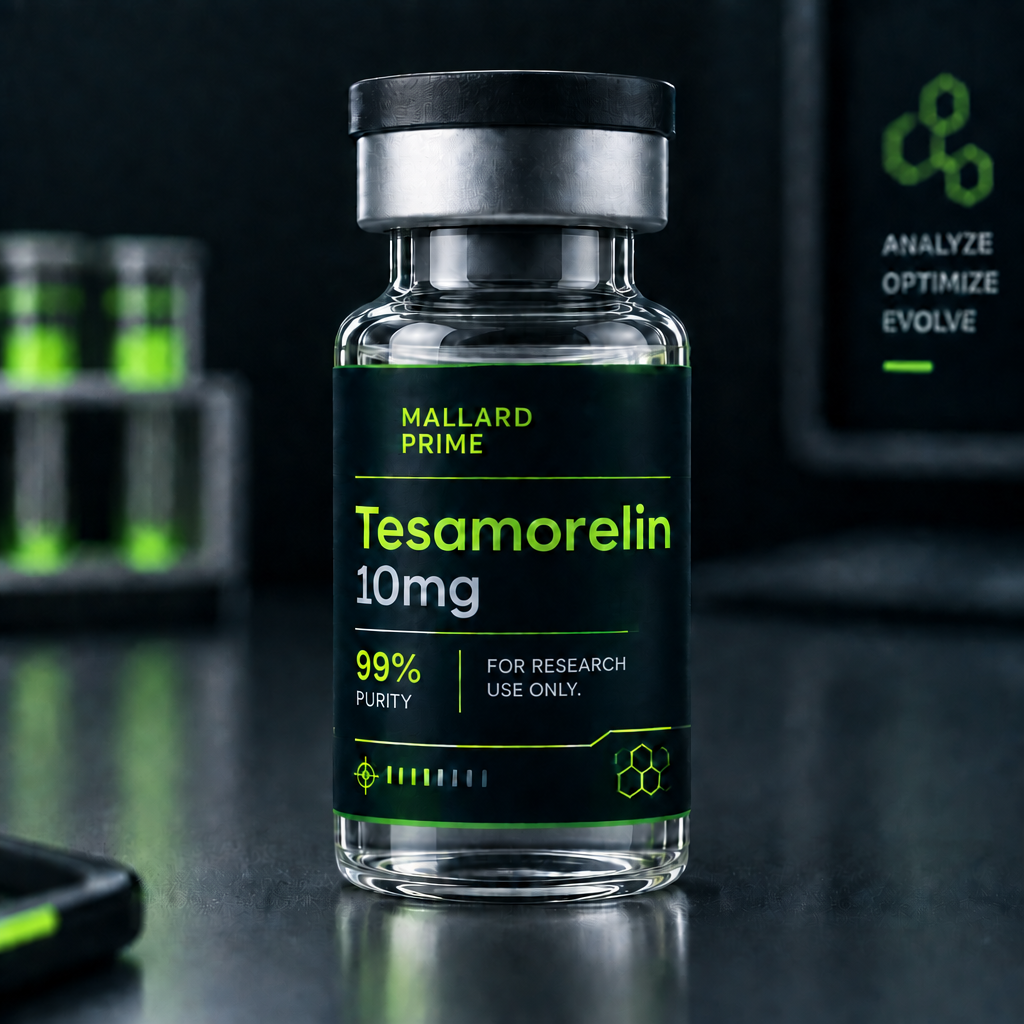
Tesamorelin is a synthetic 44-amino-acid peptide analogue of Growth Hormone-Releasing Hormone (GHRH). Unlike exogenous human growth hormone (hGH), which floods systemic circulation and risks shutting down the body’s endocrine loop, tesamorelin stimulates the anterior pituitary to secrete growth hormone in a natural, pulsatile manner. Originally developed to treat lipodystrophy in HIV-positive patients, it has emerged as a focused tool for visceral fat management, metabolic health, and neuroprotection.
Primary Purpose and Core Benefits
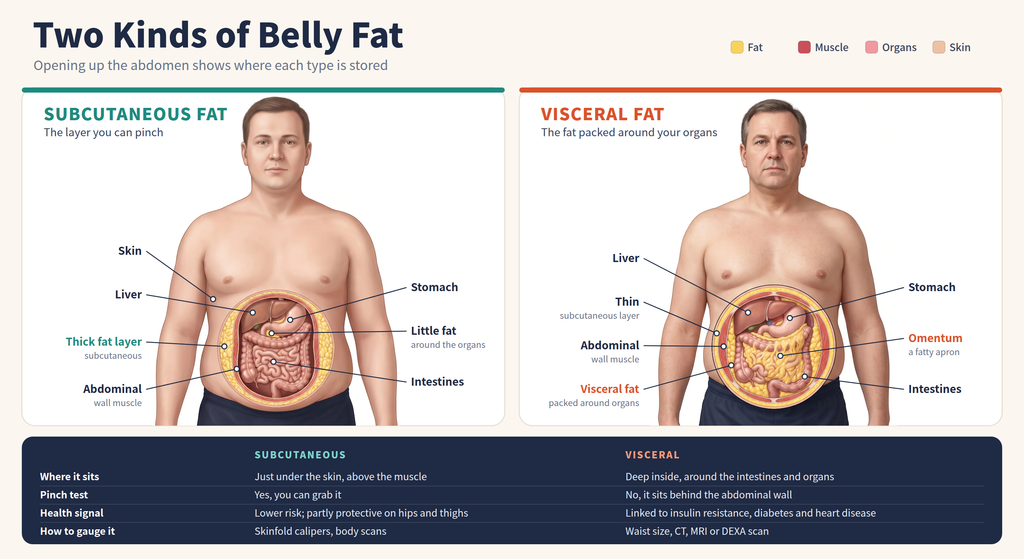
Tesamorelin primarily targets deep intra-abdominal adipose tissue rather than subcutaneous fat.
Selective Visceral Fat Reduction: It promotes lipolysis specifically within visceral adipose tissue (VAT)—the biologically active fat wrapped around organs linked to systemic inflammation and cardiovascular disease.
Preservation of Lean Muscle: By raising endogenous growth hormone and downstream Insulin-like Growth Factor 1 (IGF-1), it helps preserve lean mass during fat-loss phases.
Hepatic Fat Clearance: Clinical evidence demonstrates significant decreases in liver fat (hepatic steatosis) and slowing of fibrotic progression.
Cognitive Function: Clinical trials indicate improved executive function, verbal memory, and working memory via GH/IGF-1 signaling in the brain.
Metabolic Preservation: Unlike direct exogenous hGH administration, tesamorelin carries a lower risk of causing severe insulin resistance or shutting down native pituitary feedback loops.
Evidence from the Literature
- Visceral Fat Reduction
In a landmark double-blind, randomized Phase III clinical trial published in The New England Journal of Medicine, Falutz et al. (2007) evaluated 412 patients receiving either 2 mg of tesamorelin or placebo daily for 26 weeks.
Key Finding: Patients in the tesamorelin cohort achieved an average 15.2% reduction in visceral adipose tissue as quantified by CT scans (compared to a slight gain in the placebo arm), alongside significant reductions in triglyceride levels and improvements in the cholesterol-to-HDL ratio, all without altering subcutaneous fat reserves.
- Cognitive Enhancement
A randomized, placebo-controlled trial published in Archives of Neurology / JAMA Neurology by Baker et al. (2012) evaluated the cognitive impact of daily subcutaneous tesamorelin over 20 weeks in healthy older adults and individuals with mild cognitive impairment (MCI).
Key Finding: Tesamorelin produced significant, measurable improvements across executive function, task-switching, and verbal memory in both healthy participants and those with MCI. The cognitive gains correlated with a 117% increase in serum IGF-1 levels, demonstrating the central nervous system benefits of restorative GHRH therapy.
- Hepatic Fat and Non-Alcoholic Fatty Liver Disease (NAFLD)
In a multicenter, randomized trial published in The Lancet HIV, Stanley et al. (2019) studied the effects of tesamorelin on liver fat and fibrosis over 12 months.
Key Finding: Participants receiving tesamorelin experienced a 37% relative reduction in hepatic fat fraction (HFF), with 35% achieving normal liver fat thresholds (<5% HFF) compared to only 4% in the placebo group. The study also demonstrated that tesamorelin halted the progression of liver fibrosis and decreased levels of the liver damage enzyme alanine aminotransferase (ALT).
Subcutaneous Administration Protocol
Clinical protocols utilize subcutaneous (SubQ) micro-injections using standard insulin syringes (typically 30G to 31G, 5/16-inch).
Standard Dosage: 1 mg to 2 mg administered subcutaneously once daily.
Timing: Administer in a fasted state—either in the morning immediately upon waking (waiting at least 30–45 minutes before food) or right before sleep, at least 2 hours after the final meal. High circulating insulin or glucose blunts GHRH-mediated growth hormone release.
Injection Sites: The lower abdominal wall (avoiding a 2-inch circle around the belly button) is preferred. Subcutaneous tissue on the outer thigh or upper triceps can serve as alternate injection areas.
Site Rotation: Rotate injection points daily to avoid local irritation, erythema, or lipodystrophy at the injection site.
Reconstitution & Handling: Reconstitute lyophilized tesamorelin powder slowly using bacteriostatic water, trickling the liquid down the inner vial wall without shaking. Store reconstituted vials strictly between 2°C–8°C (36°F–46°F) and protect from light.
Cycle Duration: A typical therapeutic cycle spans 12 to 26 weeks. Baseline and interim blood panels tracking fasting glucose, HbA1c, and serum IGF-1 are recommended to ensure levels remain within optimal physiological ranges.
